Live Enzymes.
Raw Vitality.
Raw milk is a miracle of nature—a complete food retaining every vital enzyme, vitamin, and probiotic.
Find Raw Milk →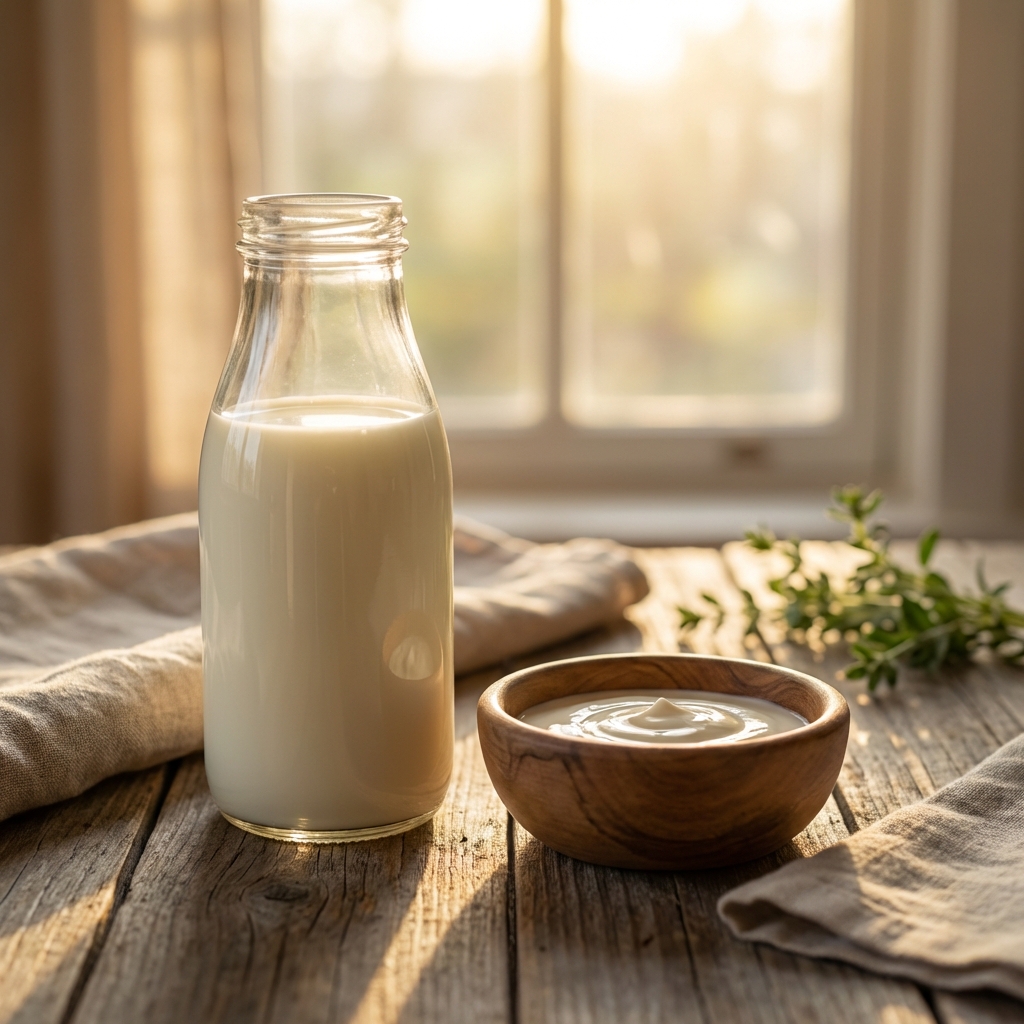
100% Bioavailable
Contains lactase-producing bacteria that aid digestion.
Metabolic Priming
Rich in Fat-Soluble Vitamins (A, D, K2) and CLA.
The Sourcing Guard
We only index sources adhering to the Raw Milk Institute standards.
What Is Raw Milk?
Raw milk is milk that has not been pasteurized or homogenized. It comes directly from cows, goats, or sheep and retains all naturally occurring enzymes, bacteria, and nutrients in the form they exist at the time of milking.
Pasteurization — heating milk to a specific temperature to kill pathogenic bacteria — became standard practice in the United States in the mid-20th century following outbreaks of bovine tuberculosis and brucellosis. Three main pasteurization methods are used today: vat pasteurization (145°F for 30 minutes), High-Temperature Short-Time (HTST, 161°F for 15 seconds), and Ultra-High Temperature (UHT, 280°F for 2 seconds). Higher temperatures degrade heat-sensitive enzymes such as alkaline phosphatase and affect certain B vitamins.
Homogenization is a separate mechanical process that breaks fat globules into uniform size so cream does not separate. Raw milk left unhomogenized naturally separates — cream rises to the top — a characteristic many consumers consider a sign of freshness and minimal processing.
Why People Choose Raw Milk
Consumers choose raw milk for a range of reasons — taste, tradition, digestive tolerance, and a preference for minimally processed food. Proponents such as the Weston A. Price Foundation argue that raw milk offers nutritional advantages that pasteurization reduces or eliminates. The FDA and CDC maintain that pasteurization does not meaningfully alter nutritional value and is essential for food safety. Both positions are represented here so readers can make informed decisions.
Enzymes
Raw milk contains active enzymes including lactase, lipase, and alkaline phosphatase. Pasteurization destroys these enzymes — alkaline phosphatase absence is used as a quality-control indicator that pasteurization was effective.
Beneficial Bacteria
Fresh raw milk from a clean dairy contains diverse lactic acid bacteria including Lactobacillus strains. Pasteurization eliminates these organisms by design — which is why pasteurized milk putrefies rather than sours.
Fat-Soluble Vitamins
Raw milk from 100% grass-fed cows is associated with higher concentrations of vitamins A, D, and K2, as well as conjugated linoleic acid (CLA). These levels are influenced more by the animal's diet than by pasteurization alone — connect to overall metabolic health.
Taste & Seasonality
Many raw milk consumers cite flavour as their primary motivation. Spring milk from cows on fresh grass tastes noticeably different from winter milk. This natural variability is considered a feature, not a flaw.
The above represents consumer motivations and proponent positions, not medical claims. Grazemap does not dispense medical advice. For guidance on raw milk and health, consult a licensed healthcare provider.
Is Raw Milk Safe?
The FDA and CDC recommend against consuming raw milk, citing Salmonella, E. coli O157:H7, Listeria monocytogenes, and Campylobacter as pathogens of concern. These bacteria can be present in milk that looks, smells, and tastes completely normal. Risk is highest for pregnant women, young children, older adults, and immunocompromised individuals.
Proponents distinguish between milk from high-volume industrially managed herds — where pasteurization serves as an essential safety backstop — and milk from small, carefully managed grass-fed dairies where animal husbandry and testing protocols are designed to prevent contamination in the first place.
The Raw Milk Institute (RAWMI) Approach
The Raw Milk Institute is a nonprofit that trains raw dairy farmers in food safety and maintains a public directory of listed farms. RAWMI-listed farms develop a written Risk Analysis and Management Plan (RAMP) identifying Critical Control Points and Standard Sanitary Operating Procedures (SSOPs) specific to their operation, and commit to routine bacterial testing.
RAWMI Common Standards require:
- →Standard Plate Count (SPC) below 5,000 cfu/mL
- →Coliform count below 10 cfu/mL
- →Regular testing for Listeria, Salmonella, and E. coli O157:H7
- →Written protocols for equipment sanitation and cold-chain management
RAWMI is a voluntary private organization, not a government regulatory body. RAWMI listing does not replace state licensing or FDA oversight.
Find Your Source
Ready to find raw milk near you?
How to Find a Raw Milk Farm Near You
Buying raw milk requires some research and a relationship with your farmer. Here is a proven process for finding a trustworthy source.
-
1
Check your state's raw milk purchase rules
Raw milk laws vary widely. Confirm whether your state permits retail sale, on-farm direct sale, herd-share arrangements, or prohibits raw milk entirely. Visit rawmilkinstitute.org/states or realmilk.com/state-updates for current summaries.
-
2
Search Grazemap for farms near your zip code
Use Grazemap to locate indexed raw milk sources near you. The directory focuses on farms meeting RAWMI standards or equivalent state-verified testing requirements.
-
3
Verify the farm's RAWMI listing or state license
Cross-reference on the RAWMI public listing or confirm a current state dairy license. Ask to see recent bacterial test results (SPC, coliform, pathogen panels).
-
4
Contact the farm to confirm availability and terms
Many small farms operate via herd-share membership with limited spots or seasonal availability. Call or email ahead — most farmers welcome the conversation.
-
5
Ask the farmer your safety and quality questions
Use the checklist below. A transparent farmer will welcome specific questions. Reluctance to share test results or describe sanitation protocols is a signal worth heeding.
-
6
Visit the farm before committing
A farm visit is the most reliable due diligence you can do. Observe animal condition, milking parlour cleanliness, pasture access, and cold-chain handling. Taste a sample. If the farm discourages visits, look elsewhere.
Raw Milk Laws by State
Raw milk is among the most unevenly regulated foods in the United States. Federal law under 21 CFR 1240.61 prohibits interstate shipment of packaged raw milk for human consumption — regardless of state law. Individual states set their own rules for intrastate production and sale, creating a patchwork of four broad categories.
Retail Sale Permitted
Licensed dairies may sell raw milk in retail stores, farmers markets, or farm stores to the general public.
On-Farm / Direct Sale Only
Consumers may purchase raw milk directly from the farm where it is produced. Distribution or resale off-farm is not permitted.
Herd Share / Cow Share Only
No commercial sale is permitted, but consumers may access raw milk through a formal partial-ownership arrangement in the dairy animal or herd.
Prohibited
All distribution for human consumption is prohibited. Herd-share recognition varies — verify with your state's Department of Agriculture.
Important: Raw milk laws change frequently. The above describes framework categories only — not specific state statuses, which may have changed. Always verify with your state's Department of Agriculture before purchasing. This is not legal advice.
Questions to Ask Your Raw Milk Farmer
A trustworthy farmer will welcome these questions. Use this checklist before committing to a purchase or herd-share agreement.
Herd Health
- What breed of cows do you raise, and what percentage carry A2/A2 genetics?
- How many animals are in your milking herd?
- Do you use antibiotics? If so, what is your withdrawal protocol before milking resumes?
- Are cows regularly tested for bovine tuberculosis and brucellosis?
Feed & Pasture
- What percentage of the diet is pasture versus supplemental feed?
- Does supplemental feed include grain, soy, or GMO-derived ingredients?
- How many months per year are cows on fresh pasture?
Testing & Safety
- Do you test milk for Standard Plate Count, coliform, and pathogen panels? How often?
- Are you RAWMI-listed or state-licensed for raw milk production?
- Can I see your most recent test results?
- What is your protocol if a batch fails a safety test?
Handling & Pickup
- What temperature is milk chilled to at bottling, and how quickly after milking?
- How soon after milking is milk available for pickup?
- Do you offer a herd-share, CSA membership, or farm-store purchase?
Raw Dairy Beyond the Glass
Raw milk is the starting point. Most raw dairies also produce derivative products — understanding each helps you ask the right sourcing questions.
Raw Butter & Raw Cream
Raw butter and raw cream have no federal aging requirement and can be sold intrastate where state law permits. Grass-fed raw butter from A2 herds is among the highest-CLA dairy products available. Pairs well with pastured eggs as part of a traditional whole-food diet.
Raw Kefir
Kefir made from raw milk uses live kefir grains to ferment the native bacterial profile alongside the introduced cultures, producing a more complex probiotic product than kefir made from pasteurized milk. Keep cold and consume within 7–10 days of bottling.
Raw Aged Cheese (The 60-Day Rule)
Under 21 CFR Part 133, raw milk hard cheese aged at 35°F or above for at least 60 days may be sold in interstate commerce. This makes aged raw cheddar, gouda, and similar styles widely available nationally. Softer and fresh raw milk cheeses are generally limited to intrastate sale under state law.
A1 vs. A2 Milk
A1 and A2 refer to beta-casein protein variants, not pasteurization status. Breeds naturally high in A2 genetics include Jersey, Guernsey, and Normande. A2/A2 raw milk combines the genetic and processing characteristics many proponents find most desirable — ask your farmer about herd genetics.
Looking beyond dairy? Explore grass-fed regenerative meat, pastured pork, and wild-caught fish on Grazemap.
Frequently Asked Questions
Why choose raw milk over pasteurized? +
How do I find safe raw milk near me? +
Is raw milk legal to buy? +
What is a herd share? +
Can I buy raw milk at a grocery store? +
What pathogens concern health authorities about raw milk? +
How do clean dairies reduce raw milk risk? +
Does raw milk help with lactose intolerance? +
What is A2 raw milk? +
How should I store raw milk at home? +
What does "100% grass-fed" actually mean? +
What is the Raw Milk Institute (RAWMI)? +
Find Real Food Near You
Find Raw Milk Near You
Grazemap indexes raw milk sources meeting RAWMI standards. Search by location to find farms, herd shares, and farm stores near you.
Search Raw Milk →